Your First Property VP : What No One Tells You After Key Collection (But Matters Later)
- kayli

- 2 days ago
- 3 min read
VP stands for Vacant Possession.
In simple terms, it is the moment when the developer or seller officially hands over the keys to the property, and you are legally entitled to take "possession" of the empty (vacant) unit.
Key collection day feels like a milestone you’ve been working towards for years.
You step into the unit, take a quiet walk around, and for a moment. It feels real, this is yours.
But after that moment passes, most people move straight into renovation, furniture, and moving plans.
What often gets skipped are the small decisions that quietly affect your finances for years.
This isn’t a checklist for perfection. It’s a guide to help you avoid the things that usually only become obvious later.

1. Before Renovation: Check Defects and Know Your Rights
Before engaging any contractor, slow this part down and engage a defect specialist instead.
You’re still within your defect liability period (DLP), usually around 24 months, which means:
The developer is responsible for fixing issues
You have the right to report and request rectification
Take time to:
Inspect thoroughly (walls, tiles, plumbing, windows)
Document everything (photos, dates, emails)
Submit your defect list properly
Fixing it now is on the developer. Fixing it later comes out of your own pocket.
2. Insurance : Understand What Your Building Policy Actually Covers
Once you receive your keys, your building will usually be managed by the Joint Management Body (JMB) or management office.
They hold a master fire insurance policy.
What it covers:
The building structure
What it does not cover:
Your renovation works
Built-in cabinets and fittings
Furniture and appliances
This is where many first-time owners assume they’re protected, but they’re only partially covered.
If you’ve invested in renovation, you decide your safety net value - that value needs to be protected separately.
3. Renovation Phase: The Risk Most People Overlook
Renovation is one of the highest-risk periods for your property.
There are real possibilities:
Fire from electrical works
Water damage that hits the wall or even newly arrived sofa
Accidental damage to neighbouring units (not another expenses you want to pay from your own pocket)
Your contractor should include Contractor All Risk (CAR) insurance in the quotation. It covers the damages that happens during renovation period.
If it’s not included, it’s worth asking:
What protection is in place if something goes wrong?
Because during this stage, the cost of one incident can easily outweigh what you saved by skipping coverage. If your contractor is not providing it, you can secure it yourself here.
4. Moving In: More Than Just Logistics
When the space is ready, moving in becomes more than just a task list.
Some people choose to:
Cleanse : Clear the space in a way that aligns with their beliefs (a prayer, an incense or engage a professional cleaning team!)
Prosperity : Bring in prosperous essential items (材米油盐酱醋茶)
Charcoal (the raw material for fire)
Rice (Asian staple)
Oil (Cooking oil, olive oil, ghee)
Salt (Spice up your space)
Sauce (Soy sauce, shiracha or simple tomato sauce)
Vinegar (White vinegar, apple cider or maybe balsamic)
Tea (in this case, I'd say coffee bean can do too)
In core these are the basics that kickstart life in your space, so anything resonates can do
Alive : Turn on fan and lights, let the home come alive
Produce : Have their first simple meal at home
It’s not about doing everything “right”. It’s about creating a sense of starting point.
That memorable moment when you realise : this is home.
5. The Financial Side Most People Don’t Revisit
Behind every comfortable home is a structure that protects it.
A few areas worth reviewing early:
Fire Insurance (Content Coverage) : Does it reflect what you’ve actually spent on renovation and furnishings?
Loan Protection (MLTA or equivalent) : Does the coverage match your current loan, or was it just what was initially suggested?
Ownership & Planning : If something unexpected happens, is there clarity on who inherits the property?
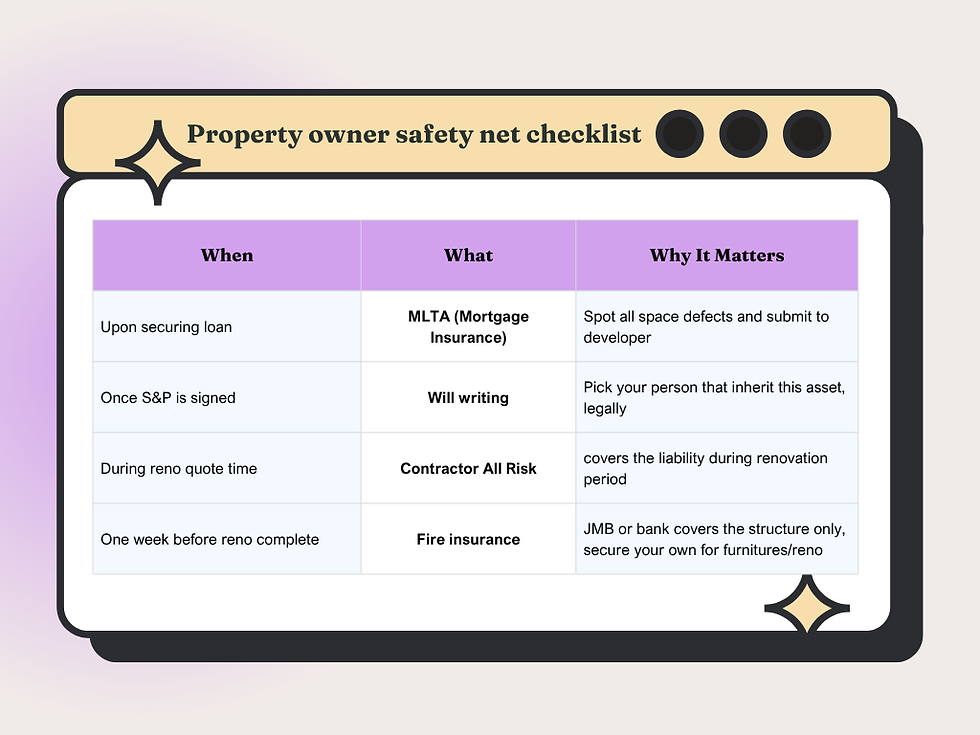
These are not urgent — until they are.
And by then, options are usually more limited.
Owning your first property is a meaningful milestone.
But the long-term experience of owning it is shaped by the decisions made in the first few months.
Not everything needs to be perfect. But the key things should be intentional.
If you’re unsure what your current setup actually covers,
or you simply want a second pair of eyes before moving forward
you can book a short review session with Kayli here
No pressure, just clarity.


Comments